Essential viewing: a documentary about mortgage fraud enforcement, and the lesson that a bank small enough to jail is the one a prosecutor can afford to charge. Watch it to understand that legal risk is balance-sheet risk, and that size is a hedge nobody prices.
Introduction
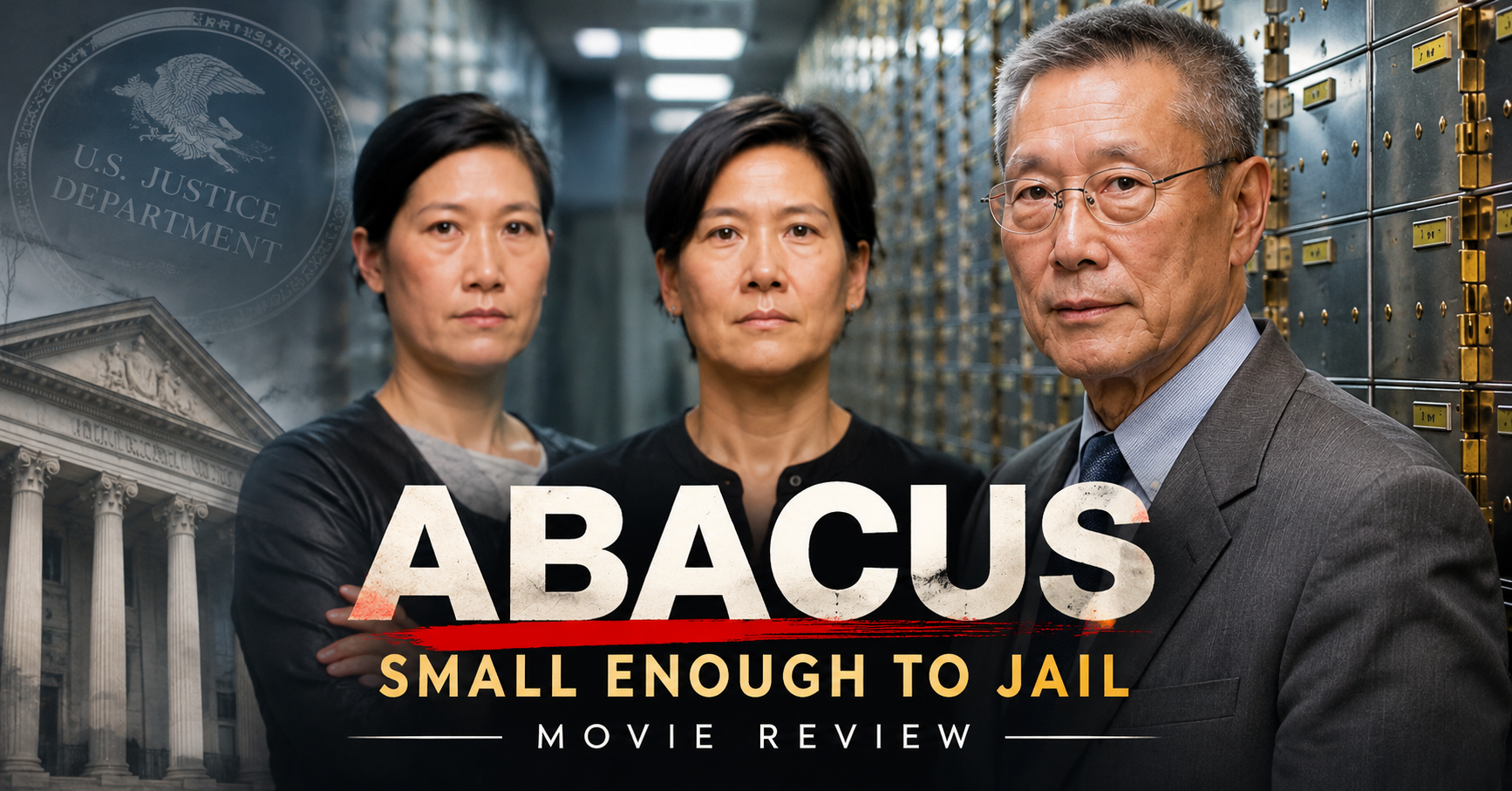
This is the best financial-crisis film ever made without a single trading floor. After 2008, the film argues, exactly one U.S. bank faced criminal charges, and it was a family-run lender in Manhattan’s Chinatown.
The giants that packaged, rated and sold the toxic paper paid fines and kept their charters. Abacus Federal Savings Bank got a grand jury and a perp walk.
Steve James, the Hoop Dreams director, treats the case as a courtroom drama and a family portrait at once. In a live trading environment, the first question you learn to ask is who actually holds the risk, and the second is who gets to walk away from it. This film answers both, uncomfortably well.
It will not teach you to read a yield curve. It will teach you that enforcement is a market too, and it is chronically mispriced.
Key Takeaways
- Prosecution follows convenience, not magnitude: the smallest lender in the room took the indictment while the largest took negotiated settlements.
- Self-reporting is not a shield: Abacus flagged the problem loans to Fannie Mae and was still charged.
- Controls are an asset: a clean performance record was the bank’s best defense, and any trader would call that edge.
- Legal cost is a risk factor: even a total acquittal drains an institution, so survival depends on how long you can fund the defense.
- “Too big to fail” has an evil twin: being too small to matter makes you the cheapest headline in town.
Synopsis
Thomas Sung, an immigrant lawyer, founded Abacus in 1984 to serve Chinatown families the big banks ignored. The business was originating residential mortgages and selling them to Fannie Mae, the government-sponsored buyer of conforming loans.
Abacus found that one of its own loan officers had been pushing through bad applications, so it fired him and reported the problem. Then Manhattan District Attorney Cyrus Vance Jr. indicted the bank itself, plus a group of current and former employees, on charges including mortgage fraud, grand larceny and falsifying business records.
The trial puts the Sung daughters, who work at the bank and help run the defense, at the center of the story. The jury acquitted on every count, and the delicious part is the evidence: the loans performed, with defaults well below the industry’s. A fraud thesis built on loans that mostly paid is a hard sell.
Cinematic Qualities
Direction
James is a patient observer, and the patience pays. The camera lingers over family dinners where sibling politics and courtroom strategy get served in the same bowl.
There is no narrator lecturing you about justice. The facts do the lecturing, which is the right editorial call.
Performances
The Sungs are not actors, which is exactly why the film works. Thomas’s stoicism and his daughters’ mix of fury and gallows humor feel more real than any scripted Wall Street villain.
Production Design
The visual vocabulary is banker’s boxes, fluorescent courthouse corridors and loan files stacked to the ceiling. After years of glowing terminals, it is funny how much of finance still runs on a manila folder and a photocopier.
That is the film’s best unintended joke. The supposed fraud ring operated with staplers, and the human need to be seen as a victim or a hero has not changed since the open-outcry pits.
The Trader’s Lens
Central Financial Concepts
- Originate-to-distribute: Abacus made loans and sold them to Fannie Mae, so its exposure was repurchase risk on defective loans rather than a pile of toxic securities.
- Underwriting controls: income verification, appraisals and officer oversight separate a fraud ring from a bank with one bad employee.
- Moral hazard: institutions priced as too big to fail have little reason to fear prosecution, while small ones carry all the downside.
- Regulatory context: the post-2008 era produced large fines and deferred settlements for major banks and strikingly few criminal cases.
Lessons for Traders
- Counterparty risk includes legal risk: a bank can be solvent and well run and still be crushed by a prosecution.
- Real-world analog: HSBC’s 2012 money-laundering case ended in a deferred prosecution agreement rather than an indictment of the bank, and Goldman settled with the SEC for $550 million in 2010 over a synthetic CDO that was, naming coincidence and all, called ABACUS 2007-AC1.
- Document everything: the same boring files that look like clutter are what kept this bank alive.
- Size is a hedge: being large enough that prosecutors fear collateral damage is a form of insurance, and nobody charges a premium for it.
Accuracy vs. Dramatization
The mechanics are refreshingly accurate, because the film mostly stays in the paperwork. Selling loans to a government-sponsored buyer carries real repurchase exposure if the loan files prove defective, and the film never pretends otherwise.
In a live trading environment, this rings true because the real risk always lives in process, not in the headline instrument. I have watched desks survive terrible months because their controls were boring, and the film grasps that instinct.
Where it leans into drama is the moral framing. Abacus is the sympathetic underdog, and the film is less curious than it could be about how a bad loan officer got through the controls in the first place.
Hollywood usually invents a heroic fix that is its own variety of fraud, and to its credit this one doesn’t. The heroism here is simply keeping the files straight and surviving the trial.
Psychology & Culture
The striking thing is the identity-based decision-making on both sides of the courtroom. The Sung family sees the bank as an extension of their community, so every accusation lands as a personal insult and every legal choice doubles as a loyalty test.
The prosecution runs the ego-driven rationalization chain every desk recognizes: we already announced this, so now we have to win it. Sunk cost is not just a trading bias, it is a career incentive.
Firm culture matters too. Large institutions tend to select for people who protect the franchise, while small ones select for people who protect the family, and both produce blind spots. Only one of them is cheap to indict.
Trader Insight
The most unsettling idea in the film is that accountability flows to wherever it is cheapest to apply. A prosecutor’s office has a budget and an ego, and it takes the case it can finish rather than the one that matters most.
Audience Fit
- Retail traders: a sharp lesson in how institutional risk and accountability get distributed, though it offers nothing on strategy or execution.
- Finance and economics students: excellent fodder for a seminar on moral hazard and enforcement, but it skips the securitization math entirely.
- Wall Street insiders: you will nod at the controls and wince at the optics, but do not expect new market insight.
- General audiences: a gripping family and courtroom drama that needs no finance background, if you can tolerate a slow middle stretch.
Verdict
Final Score: 8/10
Composite Score
| Category | Score (/10) | Weight | Weighted | Bar |
|---|---|---|---|---|
| Financial Accuracy | 9 | 30% | 2.7 | |
| Cinematic Quality | 8 | 20% | 1.6 | |
| Trader Psychology | 8 | 20% | 1.6 | |
| Educational Value | 8 | 20% | 1.6 | |
| Rewatchability | 7 | 10% | 0.7 | |
| Total | 100% | 8.2 |