


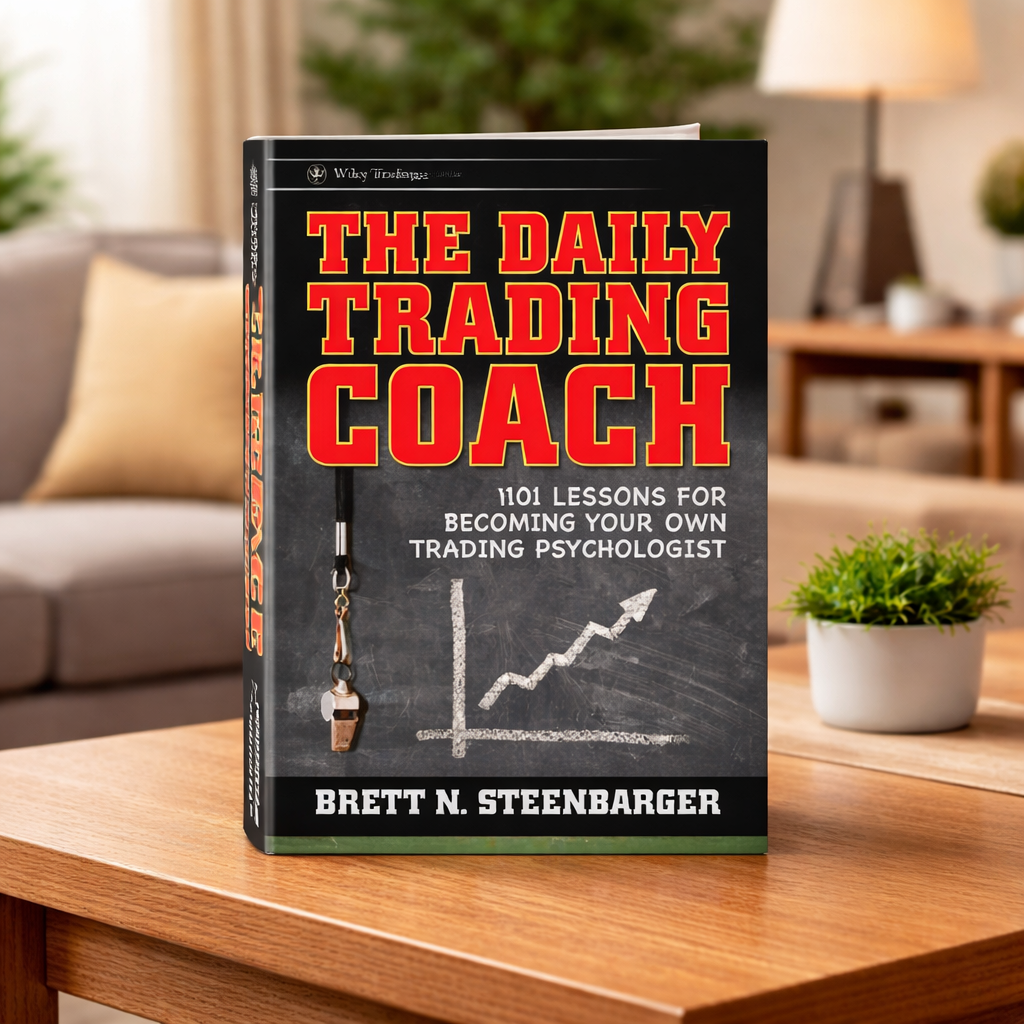
Daily Trading Coach review explains why mindset matters more than strategy in trading. Learn how daily habits, journaling, and discipline can improve consistency and decision-making—see how these lessons can strengthen your trading approach.
The Daily Trading Coach by Brett N. Steenbarger is not a typical trading book. It does not promise a winning strategy or a secret indicator. Instead, it focuses on the trader—the person behind the screen. Its central theme is simple but powerful: your results in the market depend as much on your mindset as on your method.
This idea matters more than ever today. Markets move fast. Information is endless. Many retail traders can access tools that once belonged only to professionals. Yet most still struggle to stay consistent. Steenbarger argues that the missing piece is not knowledge, but discipline, self-awareness, and daily practice—much like an athlete training for competition.
In that sense, this book is less about trading and more about becoming the kind of person who can trade well.
Core Ideas
The book is structured as 101 short lessons. Each entry reads like a daily reflection or coaching note. While this format may seem simple, it builds a clear argument step by step.
1. Trading is a performance skill
Steenbarger compares trading to sports or music. You cannot just read about it—you must practice it. Like a basketball player shooting free throws, traders must build habits through repetition. Reviewing trades, tracking emotions, and refining decisions are part of that practice.
2. You are your own coach
Most retail traders do not have mentors. The book fills that gap by teaching readers how to guide themselves. This means setting goals, reviewing mistakes, and creating routines. It also means being honest. A trader who ignores their flaws cannot improve.
3. Emotions are data, not enemies
Many beginners think emotions are the problem. Steenbarger takes a different view. Fear, stress, and excitement are signals. They show when risk is too high or when confidence is shaky. Instead of suppressing emotions, traders should learn from them.
4. Small changes create big results
The book stresses daily improvement. You do not need to overhaul your system overnight. A small habit—like writing down one lesson after each trade—can lead to steady progress over time. Think of it like compound interest, but applied to behavior.
5. Focus on process, not outcome
Winning trades can still be bad decisions. Losing trades can still be correct. Steenbarger urges traders to judge themselves based on process. Did you follow your rules? Did you manage risk? If yes, the outcome matters less. This mindset reduces emotional swings.
6. Build routines and structure
Successful traders often follow strict routines. They prepare before the market opens. They review after it closes. These routines create stability in a field that is otherwise uncertain.
Strengths
Clarity and simplicity
One of the book’s strongest features is its clear language. Each lesson is short and direct. You do not need a finance background to understand it. This makes it ideal for beginners.
Actionable advice
The book does not stay in theory. It offers practical steps. For example, Steenbarger suggests keeping a trading journal, setting daily goals, and reviewing both good and bad trades. These are tools readers can use right away.
Psychological depth
While the language is simple, the ideas are not shallow. Steenbarger draws on his experience as a psychologist. He explains why traders act the way they do. He also shows how habits form and how they can change.
Flexible format
The “daily lesson” structure works well. Readers can go through the book slowly, one entry at a time. This fits the idea of steady improvement. It also makes the book easy to revisit.
Real-world relevance
The book speaks directly to the problems traders face: overtrading, fear of loss, chasing profits, and lack of discipline. These issues remain the same, even as markets evolve.
Limitations
Not a strategy guide
Readers looking for specific trading systems may feel disappointed. The book does not teach technical analysis or entry signals. It assumes you already have—or will develop—a strategy elsewhere.
Repetition of ideas
Because the book has 101 entries, some themes repeat. Discipline, self-awareness, and routine appear often. While this reinforces the message, some readers may find it redundant.
Requires self-motivation
The advice is clear, but applying it is not easy. The book asks readers to take responsibility for their growth. Those who prefer step-by-step rules may struggle with the open-ended nature of self-coaching.
Dated examples in parts
Although the core lessons are timeless, some examples reflect older market conditions. However, the psychological insights still apply today.
Trader’s Takeaway
For a retail trader, the value of this book lies in how it changes daily behavior.
Imagine two traders using the same strategy. One reviews each trade, tracks mistakes, and adjusts over time. The other trades on impulse and ignores past errors. Over months, their results will likely diverge—not because of the strategy, but because of discipline.
Steenbarger’s lessons help you become the first trader.
Here are a few practical ways to apply the book:
- Start a trading journal
Write down why you entered a trade, how you felt, and what happened. Over time, patterns will appear. - Set one daily goal
Keep it simple. For example: “Follow my stop-loss on every trade today.” This builds consistency. - Review your day
After the market closes, ask: What did I do well? What can I improve? This turns experience into learning. - Reduce position size when stressed
If emotions run high, trade smaller. This keeps risk under control while you regain focus. - Treat trading like training
Think of each day as practice, not just profit-seeking. This mindset reduces pressure and improves decision-making.
In short, the book teaches that success in trading is less about finding the perfect setup and more about becoming a disciplined decision-maker.
Who Should Read
New traders
Beginners will benefit from the simple language and clear guidance. It sets the right foundation early.
Retail traders struggling with consistency
If you often break your rules or feel emotional during trades, this book speaks directly to those challenges.
Finance students
It offers a different angle on markets—one that focuses on behavior rather than theory.
Experienced traders
Even seasoned traders can use it as a refresher. The daily format makes it a useful tool for ongoing improvement.
Verdict
The Daily Trading Coach stands out because it shifts the focus from the market to the trader. It argues, convincingly, that long-term success depends on habits, discipline, and self-awareness.
It is not a book you read once and forget. It is a book you return to—like a manual for steady growth.
For readers willing to put in the work, its lessons can be powerful. For those looking for quick wins or easy strategies, it may feel less satisfying.
Rating: 8.5/10
A strong, practical guide that reminds us of a simple truth: in trading, your greatest edge is not a system—it is yourself.